→
A need for effective solutions against a broad spectrum of respiratory viruses.
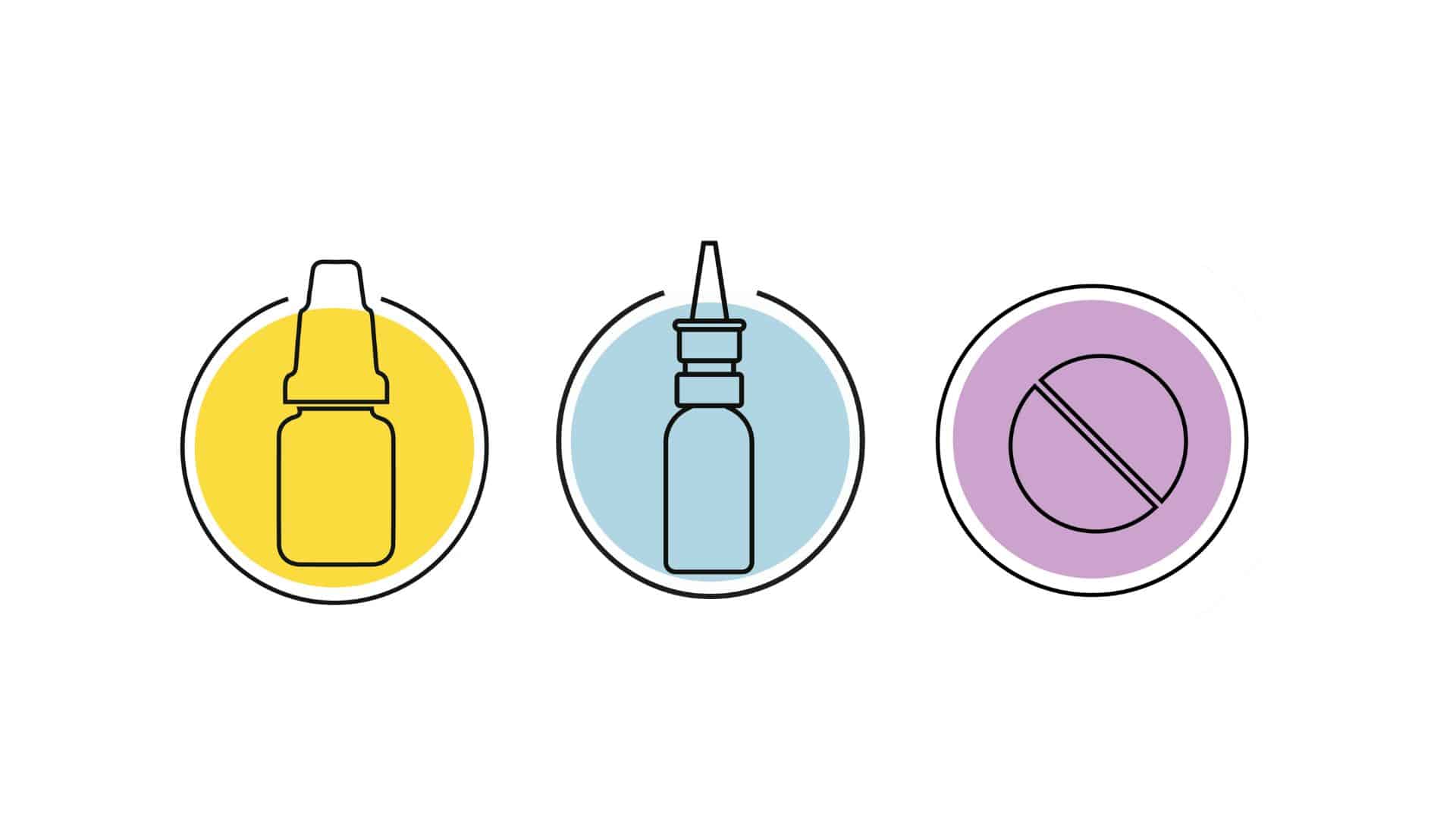
Respiratory viral infections, allergies, and dry eyes are a source of frequent, recurrent, and often chronic health needs. They call for safe, effective, and well-tolerated solutions that are suitable for long-term use and a broad audience, including sensitive populations.
Carragelose (iota-carrageenan) is a naturally occurring polymer that is extracted from red algae and acts as a protective physical barrier on mucous membranes. This non-pharmacological technique meets a growing market demand for prevention and relief solutions with no systemic mechanism of action.
→
A need for effective solutions against a broad spectrum of respiratory viruses.
→
A demand for non-specific alternatives to block viruses and allergens on mucous membrane surfaces.
→
A demand for safe, well-tolerated products, usable in children from one year old.
→
A need for solutions covering multiple indications (respiratory, allergic, ophthalmic) and the whole season.
→
High regulatory expectations for MDR-compliant medical devices.
Carragelose forms a moisturizing protective layer on nasal, pharyngeal, or ocular mucous membranes. As well as preventing viruses and allergens from adhering to cells, this barrier facilitates their natural elimination and strengthens the resilience of mucous membranes.
This mechanical, non-specific action allows for repeated use, without resistance phenomena, while offering an excellent safety profile.
What makes it unique:
| Products | Active Ingredients | Claims |
|---|---|---|
| COP – Nasal spray for adults and children 2y+ | 1,2 mg/ml Carragelose | Prophylactic and supportive treatment of viral infections of the respiratory tract |
| COPK – Nasal spray for adults and children 1y+ | 1,2 mg/ml Carragelose | Prophylactic and supportive treatment of viral infections of the respiratory tract |
| COF – Nasal spray for adults and children 1y+ | 1,2 mg/ml Carragelose + 0,4 mg/ml Kappa‑carraghénane | Prophylactic and supportive treatment of viral infections of the respiratory tract |
| COFS/AKUT – Nasal spray for adults and children 1y+ | 1,2 mg/ml Carragelose 0,4 mg/ml Kappa‑carraghénane 7 % Sorbitol |
Prophylactic and supportive treatment of viral infections of the respiratory tract Decongestant effect Anti-allergic |
| CALLERGIN – Nasal spray for adults and children 1y+ | 1,2 mg/ml Carragelose | Forms a protective layer on the nasal mucosa acting as a physical barrier against allergens |
| RAC – Throat spray for adults and children 1y+ | 1,2 mg/ml Carragelose | Prophylactic and supportive treatment of viral infections of the respiratory & moistening of the mouth and throat tract |
| EYELEEN – Eye drops for adults and children 6y+ | 3,2 mg/ml Carragelose | Lubricating and protective |
| LOZ – Lozenges for adults andchildren 6y+ | 10 mg/lozenge Carragelose | Prophylactic and supportive treatment of viral infections of the respiratory & moistening of the mouth and throat tract |
Yes. All Carragelose nasal spray products are preservative-free.
They rely on spray systems designed to prevent microbial contamination during use, eliminating the need for chemical preservatives—an important advantage for chronic or pediatric use.
Carragelose is tested for mercury before it is processed in the finished products. The maximum allowed amount is 1 ng of mercury per mg of Carragelose. This means that the maximum possible amount of mercury in the Carragelose lozenges is 10 ng per lozenge. In the nasal sprays or throat sprays, the Carragelose content is around 1.3 mg/day if used 4 times daily and thus the maximum mercury content is 1.3 ng/day. The PWTI value (provisional tolerable weekly intake) is currently 300 µg/week (1 µg = 1.000 ng) and includes all possible sources through which mercury can be absorbed. This includes drinking water, food, air and above all amalgam. The currently applicable limit for the absorption of organic mercury is 1.6 micrograms per kilogram of body weight and week (= 13 micrograms per day for a person weighing 60 kg). Six lozenges a day equal a maximum intake of 60 ng mercury, 200 times less than the limit value. In case of the nasal spray, the intake is almost 10,000 times less than the limit value. Marinomed also had Carragelose tested at the Fraunhofer Institute for the presence of mercury (and other metals) using optical emission spectrometry with inductively coupled plasma (ICP OES) and mercury could not be detected in the samples. Overall, the risk of absorbing mercury through Carragelose is extremely low.
Several times a day, depending on your individual requirements; overdosing is not possible.
Carragelose-containing products are marketed in multiple European and non-European countries, demonstrating strong regulatory acceptance and international scalability.
Details on launched products and markets are available here.
Yes. Multiple clinical trials involving nearly 600 adult and pediatric patients have demonstrated the safety and effectiveness of Carragelose nasal sprays in the treatment of the common cold.
In addition, in vitro studies have shown a non-specific virus-trapping effect against a broad range of respiratory viruses, including SARS-CoV-2. While Carragelose products cannot fully prevent viral infections, they may significantly reduce viral load and transmission risk.
Scientific publications are available upon request.
There have been reports that carrageenan may induce IBD (Inflammatory Bowel Disease) or colon cancer, mainly based on experiments with rats that have been fed with a diet containing very high concentrations of degraded carrageenan. Carrageenan is used in three different subtypes: iota, kappa, and lambda carrageenan that differ in their structure with respect to the number of sulfate groups. While lambda carrageenan has been shown to have pro-inflammatory properties, iota and kappa carrageenan have not such a potential. The raw material for the Carragelose products is tested for the presence of lambda-carrageenan and also the size of the polymer is tested. Carragelose (iota-carrageenan) is free of lambda-carrageenan and has a mean size of more than 1 million Dalton (very large) and it is also free of degraded components. Taken together, the use of Carragelose products poses no risk of developing IBD or colon cancer as they are devoid of lambda-carrageenan and degraded carrageenan. In addition, the daily intake is magnitudes lower compared to the maximum daily intake. The maximum daily intake of carrageenan has been set to 75 mg/kg/day for humans (4,500 mg/day in case of 60 kg body weight) and is much higher compared to the amount of carrageenan in Carragelose products even if they are extensively used. The nasal spray contains 1.2 mg/ml iota-carrageenan and a use of 4 times daily results in 1.34 mg/day, six lozenges would result in 60 mg iota-carrageenan.
Carragelose is iota-carrageenan, a natural polymer derived from red algae. When applied to mucosal surfaces, it forms a protective, moisturizing film that acts as a physical barrier against external aggressors such as viruses and allergens.
This non-pharmacological mechanism helps reduce viral load locally and supports symptom relief in respiratory and ocular indications.
Iodine can be high in seaweed, especially brown seaweed. However, the process to extract the carrageenan involves a lot of water and chemicals, resulting in very low levels in the final product (iota-carrageenan). Iodine does not bind to carrageenan in any way. Analyses showed that the levels are in the order of detection limits with <10 ppm. This means that 1 mg carrageenan contains less than 10 ng iodine. In case of the nasal spray containing 1.2 mg/ml Carragelose, the amount of iodine would be max. 13.4 ng per day if used 4 times daily. The iodine content in the nasal spray containing a combination of 1.2 mg/ml Carragelose and 0.4 mg/ml kappa-carrageenan would be max. 18 ng per day. The daily recommended dose of the lozenges (6 pcs) contains a maximum of 600 ng iodine.
Carragelose is currently formulated into:
From a development and manufacturing perspective, Carragelose® is well suited to spray-based delivery systems, including preservative-free formats requiring high microbiological safety standards.
Carragelose products should not be used in case of known hypersensitivity to any component of the formulation. Users should always refer to the instructions for use.
Carragelose products:
can be used during pregnancy and lactation,
are suitable for children (from 1 year for nasal sprays; from 6 years for lozenges),
are non-addictive and do not cause rebound effects or fatigue.
Child-specific spray devices delivering adapted volumes are available in many markets.